
Sponsored

Would you buy an electric or hybrid Z?

would you buy an ev z?


  • Total voters
    82

takemorepills

Well-Known Member
Joined
Aug 15, 2021
Threads
20
Messages
2,642
Reaction score
5,572
Location
Seattle area
Car(s)
Q60
EV really reduces vehicles down to an appliance.

It'll be like cordless tools, all are really pretty good these days, you just buy whichever ones match your toolbox or the chargers you already have.

The toughest thing about building an EV is sourcing the components. No engineering passion needed.....just assemble key components and pack it into a vehicle that looks like an IKEA rendering
 

ZZ2022

Well-Known Member
First Name
Blake
Joined
Jul 6, 2021
Threads
2
Messages
212
Reaction score
697
Location
Australia
Car(s)
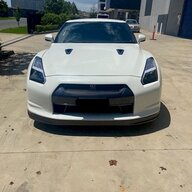
2008 R35 GTR
EV really reduces vehicles down to an appliance.

It'll be like cordless tools, all are really pretty good these days, you just buy whichever ones match your toolbox or the chargers you already have.

The toughest thing about building an EV is sourcing the components. No engineering passion needed.....just assemble key components and pack it into a vehicle that looks like an IKEA rendering

Yep, just an iphone on wheels
 

Haste

Moderator
Moderator
First Name
Ryan
Joined
Sep 17, 2020
Threads
30
Messages
1,340
Reaction score
4,594
Location
GA
Car(s)
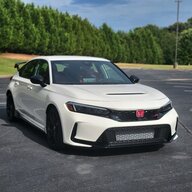
'23 Civic Type R, '09 335i, '23 Kona N
I'm hoping for a hybrid Z/Nismo to extend range plus added power, but NOT full EV yet, that will be my truck at the end of the year. A hybrid Z will make it to COTA from So Cal, love to make that road trip, do a track weekend, and back.
You didn't mention transmission, but for me the problem with a hybrid Nismo Z or hybrid Z in general is that it's unlikely they would be able to offer it with a manual. I don't think I've ever heard of a M/T performance hybrid and it's doubtful that Nissan is in any position to be the one to pull something like that off. It sounds cool in theory just not sure how realistic or even possible that would be.

If you want an automatic then I can see the appeal but all I'm hoping for with this generation Nismo Z is ICE/6MT.
 

LeatherWings

Well-Known Member
First Name
Jasper
Joined
Jan 28, 2022
Threads
5
Messages
515
Reaction score
1,386
Location
Los Angeles
Car(s)
NA & ND Miata | Cybertruck | Honda 919 | Honda Grom
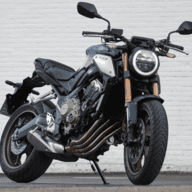
When I get an electric sports car or motorcycle, I'm going to mount some outboard loudspeakers and blast these soundwaves directly into the atmosphere and melt people's faces:


Yasha

Well-Known Member
Joined
Aug 15, 2021
Threads
0
Messages
100
Reaction score
140
Location
Ontario
Car(s)
Pending 2023 Z
Occupation
Software Engineer
I dont want to drive a sports car that sounds like a monorail. I get EV is where the world is headed, but thats when i stop caring about cars and just buy a NIssan leaf or something to get around.

Driving a sports car is not all about speed, very rarely are you at full speed, so much more goes into the driving experience. The sounds, the smell, the vibration, all these things i enjoy just as much as the speed. Once we go full EV, at least i will save some money on my expensive car hobby. I am going ride out my ICE GTR and Z into the sunset
P much this. Such a bland, watered down experience at which point it's better to spend elsewhere...always wanted to open my own gym might just work towards that :p

I get amazing 0-60 in fast trains and airplanes all the time. Yes, I'm not driving them, but none of us are gonna be driving cars soon enough anyway.
 
Last edited:

Yasha

Well-Known Member
Joined
Aug 15, 2021
Threads
0
Messages
100
Reaction score
140
Location
Ontario
Car(s)
Pending 2023 Z
Occupation
Software Engineer
EV really reduces vehicles down to an appliance.

It'll be like cordless tools, all are really pretty good these days, you just buy whichever ones match your toolbox or the chargers you already have.

The toughest thing about building an EV is sourcing the components. No engineering passion needed.....just assemble key components and pack it into a vehicle that looks like an IKEA rendering
We should not lament it. I'm at peace with it...I'm grateful to even own real 1 sports car in my entire life (which will be the Z). As long as I get to live out that childhood dream, I know there will be cool things out there for me to pick up after. And we can still probably drive our cars on the track even if they're not road legal anymore (driverless is inevitable). Horse riding is still a real hobby with a real community, so we should be fine.

From an Engineering perspective, there will 100% be new aspects of vehicles and transportations where passion can thrive. Electric power is an old concept so it's pretty boring right now, but that doesn't mean its use won't open a whole new world of possibilities in innovation.
 
Last edited:

takemorepills

Well-Known Member
Joined
Aug 15, 2021
Threads
20
Messages
2,642
Reaction score
5,572
Location
Seattle area
Car(s)
Q60
We should not lament it. I'm at peace with it...I'm grateful to even own real 1 sports car in my entire life (which will be the Z). As long as I get to live out that childhood dream, I know there will be cool things out there for me to pick up after. And we can still probably drive our cars on the track even if they're not road legal anymore (driverless is inevitable). Horse riding is still a real hobby with a real community, so we should be fine.

From an Engineering perspective, there will 100% be new aspects of vehicles and transportations where passion can thrive. R & D is a magical thing, I'm so glad I picked it for my career.
"Driverless is inevitable" seriously? What timeline you thinking?

I've worked in DOT for over 14 years. And I've worked with "connected vehicle" tech for nearly a decade. We are so far from truly "driverless" vehicles I am sure we're way more than 30 years out.
To be able to sell vehicles with no steering wheel and pedals that can drive anywhere, we would need to grow our transportation budgets exponentially. As it is now, we can barely maintain our current, crappy roads. To go truly driverless, we need consistent road conditions (i.e. perfect) everywhere, all the time. How to communicate construction detours or lane swaps to robot vehicles? How does police officers take control of traffic? Who pays parking tickets when the vehicle parks illegally? How to communicate with a vehicle where it can park, or the route you've chosen isn't supported by your fully autonomous vehicle?

The only way we'll get fully autonomous vehicles with no steering wheel and pedals is for early adopters who operate them in highly maintained areas.
 

Yasha

Well-Known Member
Joined
Aug 15, 2021
Threads
0
Messages
100
Reaction score
140
Location
Ontario
Car(s)
Pending 2023 Z
Occupation
Software Engineer
"Driverless is inevitable" seriously? What timeline you thinking?

I've worked in DOT for over 14 years. And I've worked with "connected vehicle" tech for nearly a decade. We are so far from truly "driverless" vehicles I am sure we're way more than 30 years out.
To be able to sell vehicles with no steering wheel and pedals that can drive anywhere, we would need to grow our transportation budgets exponentially. As it is now, we can barely maintain our current, crappy roads. To go truly driverless, we need consistent road conditions (i.e. perfect) everywhere, all the time. How to communicate construction detours or lane swaps to robot vehicles? How does police officers take control of traffic? Who pays parking tickets when the vehicle parks illegally? How to communicate with a vehicle where it can park, or the route you've chosen isn't supported by your fully autonomous vehicle?

The only way we'll get fully autonomous vehicles with no steering wheel and pedals is for early adopters who operate them in highly maintained areas.
Your points are valid. I will do my best to explain my point of view, I may be wrong as it's speculation.

Yes current computer vision tech can only work with the cleanest, crispest infrastructure. But that's now. Computers having human-like perception is not something in the far future, the industry marches at a blistering pace. This pace itself also increases quite rapidly year over year, as more talent is drawn to it and multiple related industries such as materials, semiconductors, and energy yield their own improvements. The timeline...well there are too many variables to guess. Could be soon, could be later but as I said, I do believe it's inevitable, as are many other things if we don't go extinct first.

But to answer your question about "how do we coordinate anything", it's rather simple once you have a network of vehicles that can instantly communicate with each other without our intervention. For example, a traffic light can have every stopped car start moving instantly in sync (no more reaction time delays piling up towards the back). Construction Zone? Your car knew about it before you even turned it on. Accident just happen a few hundred meters ahead? The cars that saw it can communicate it to your car before you even see it. Your car can coordinate with the cars next to it so you get around the accident at the optimal speed without any further collisions.

Not only will your car be able to do what it's told, it can agree with all surrounding cars (and other connected devices) on what they will do as a collective. It's not going to be easy making algorithms for multi-car situations such that they all instantly react to what's needed for each, but we can assume the raw processing power to run them will be there.

This is the true benefit of driverless, being able to sleep on your commute is just a minor bonus in comparison.
 
Last edited:

takemorepills

Well-Known Member
Joined
Aug 15, 2021
Threads
20
Messages
2,642
Reaction score
5,572
Location
Seattle area
Car(s)
Q60
Your points are valid. I will do my best to explain my point of view, I may be wrong obviously.

Yes current computer vision tech can only work with the cleanest, crispest infrastructure. But that's now. Computers having human-like perception is not something in the far future, the industry marches at a blistering pace. This pace itself also increases quite rapidly year over year, as more talent is drawn to it and multiple related industries such as materials, semiconductors, and energy yield their own improvements. The timeline...well there are too many variables to guess. Could be soon, could be later but as I said, I do believe it's inevitable, as are many other things if we don't go extinct first.

But to answer your question about "how do we coordinate anything", it's rather simple once you have a network of vehicles that can instantly communicate with each other without our intervention. For example, a traffic light can have every stopped car start moving instantly in sync (no more reaction time delays piling up towards the back). Construction Zone? Your car knew about it before you even turned it on. Accident just happen a few hundred meters ahead? The cars that saw it can communicate it to your car before you even see it. Your car can coordinate with the cars next to it so you get around the accident at the most optimal speed without any further collisions.

Not only will your car be able to do what it's told, it can agree with all surrounding cars (and other connected devices) on what they will do as a collective. It's not going to be easy making algorithms for multi-car situations such that they all instantly react to what's needed for each, but we can assume the raw processing power to run them will be there.

This is the true benefit of driverless, being able to sleep on your commute is just a minor bonus in comparison.
Just one example,
The interface between human activity, such as construction zones, and autonomous vehicles is going to be a very difficult hurdle to overcome.
You wouldn't believe the amount of bureaucracy and generally stupid people working in the government, furthermore many governments don't hire the best people, they hire based on other things that don't matter....in Seattle, for example, the government competes with Amazon consuming all of the talent.
I'm sure other municipalities experience similar struggles with acquiring good employees.
Why did I even bring that up?
Because every municipality operates differently and will have differing levels of effectiveness at communicating construction details to an autonomous vehicle network.
They'll need good planning.
They'll need good traffic control that won't deviate from the plans submitted to the network.
They'll need contractors and their own crews to maintain a properly functioning and safe work zone.
They'll be unlikely to be flexible if construction conditions change and it'd be beneficial to reorganize the detour.
They'll need extra training.

Ugh, just thinking about it....yikes.

Just one example of the reality check about fully autonomous vehicles.
 

LeatherWings

Well-Known Member
First Name
Jasper
Joined
Jan 28, 2022
Threads
5
Messages
515
Reaction score
1,386
Location
Los Angeles
Car(s)
NA & ND Miata | Cybertruck | Honda 919 | Honda Grom
I've worked in DOT for over 14 years. And I've worked with "connected vehicle" tech for nearly a decade. We are so far from truly "driverless" vehicles I am sure we're way more than 30 years out.
I'm not as deeply steeped in the world of this as you guys may perhaps be, but there are already driverless taxis in operation on pubic roads. The whole 'cars without steering wheels/pedals' thing may be a separate, albeit related matter.

https://www.morningbrew.com/emergin...mos-driverless-taxis-felt-surprisingly-normal


LeatherWings

Well-Known Member
First Name
Jasper
Joined
Jan 28, 2022
Threads
5
Messages
515
Reaction score
1,386
Location
Los Angeles
Car(s)
NA & ND Miata | Cybertruck | Honda 919 | Honda Grom
No engineering passion needed.....just assemble key components and pack it into a vehicle that looks like an IKEA rendering

I have to disagree there. I think those who are engineering EVs and Full Self Driving are deeply passionate about what they do. It's just that theirs is a passion that runs in direct conflict to your own.
 

takemorepills

Well-Known Member
Joined
Aug 15, 2021
Threads
20
Messages
2,642
Reaction score
5,572
Location
Seattle area
Car(s)
Q60
I think this is where you're wrong. I think those who are engineering EVs and Full Self Driving are deeply passionate about what they do. It's just that theirs a passion that runs in conflict of your own.
The problem is, we are not just looking at simply fully autonomous EVs, there is also a push to include social change to get to fully autonomous designs, such as banning "driven" vehicles from certain areas, much like some cities are experimenting with in regards to banning ICE from certain areas.

I am not against all EVs, I quite like the Rivian and Lucid Air. They are very well designed vehicles, and for me, I wouldn't mind owning one. I really don't mind EVs that still require a driver. I would prefer some more effort put into making them more interesting.
 

Tdog87

Well-Known Member
Joined
Oct 11, 2021
Threads
1
Messages
171
Reaction score
336
Location
QLD
Car(s)
M140i
You didn't mention transmission, but for me the problem with a hybrid Nismo Z or hybrid Z in general is that it's unlikely they would be able to offer it with a manual
This for me is the probably the biggest thing. I hate driving an auto as I find them extremely boring.

I don't think I've ever heard of a M/T performance hybrid
Not exactly high performance but the Honda CR-Z was marketed as a sporty hybrid and came with a 6 speed manual.

https://en.wikipedia.org/wiki/Honda_CR-Z

Ford did make a manual EV Mustang for SEMA back in 2019.

https://www.theverge.com/2019/11/5/...anual-prototype-stick-shift-lithium-sema-2019
 

Yasha

Well-Known Member
Joined
Aug 15, 2021
Threads
0
Messages
100
Reaction score
140
Location
Ontario
Car(s)
Pending 2023 Z
Occupation
Software Engineer
Just one example,
The interface between human activity, such as construction zones, and autonomous vehicles is going to be a very difficult hurdle to overcome.
You wouldn't believe the amount of bureaucracy and generally stupid people working in the government, furthermore many governments don't hire the best people, they hire based on other things that don't matter....in Seattle, for example, the government competes with Amazon consuming all of the talent.
I'm sure other municipalities experience similar struggles with acquiring good employees.
Why did I even bring that up?
Because every municipality operates differently and will have differing levels of effectiveness at communicating construction details to an autonomous vehicle network.
They'll need good planning.
They'll need good traffic control that won't deviate from the plans submitted to the network.
They'll need contractors and their own crews to maintain a properly functioning and safe work zone.
They'll be unlikely to be flexible if construction conditions change and it'd be beneficial to reorganize the detour.
They'll need extra training.

Ugh, just thinking about it....yikes.

Just one example of the reality check about fully autonomous vehicles.
We don't need government employees to do anything other than approve the projects. The heavily lifting can be subcontracted to the private sector.

And the whole point of the system is to not need people for anything anymore, other than to maintain the system and add functionalities. Why do I need someone to personally input a construction zone? When a construction project is approved, a database can be updated (computers can scan the paperwork if you really don't want any people involved) and voila, cars pull the info and on the day the project starts will adjust accordingly.

You don't even need a database lol, just a camera mounted at the location can convey the info if needed.

This doesn't mean I want driving to go away, seeing as I'm on this forum. But a slow government can only slow things, not stop them especially when big tech can shower money to help get things going.


Top