Sponsored

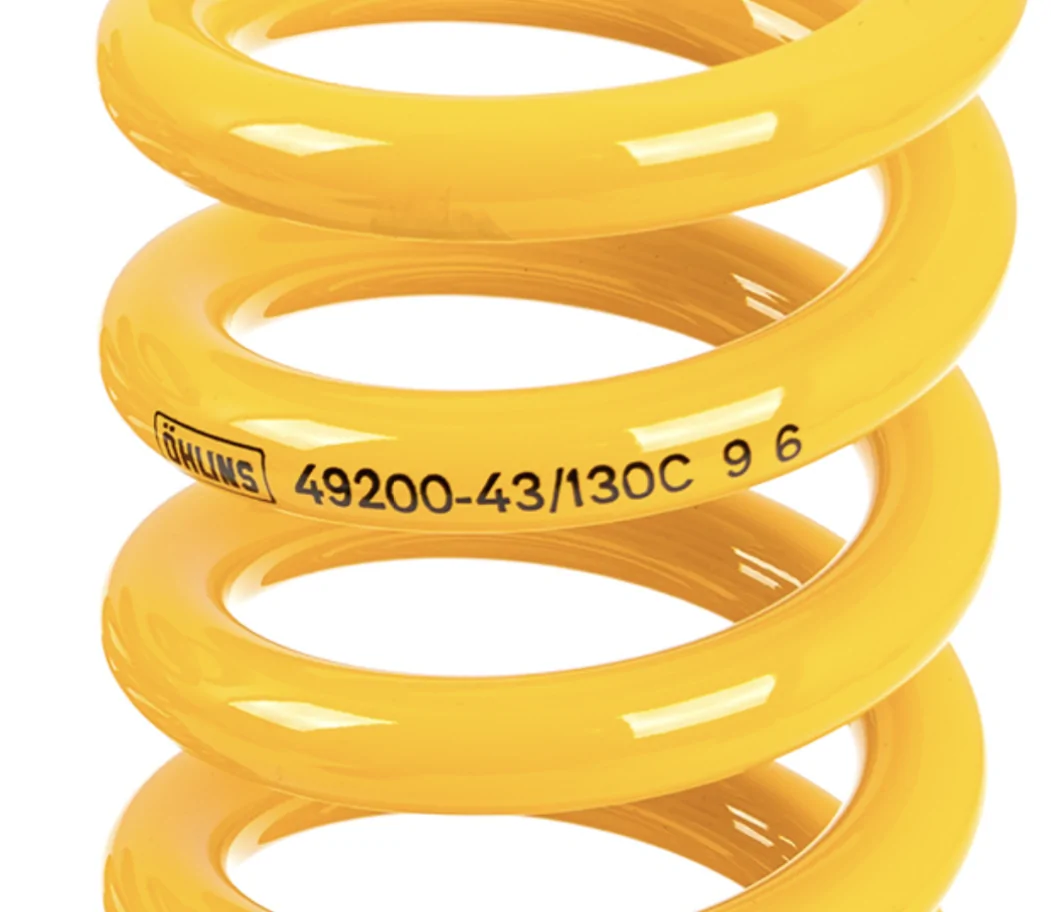
Ohlins 23+ Nissan Z DFV Road & Track Coilovers

Drago86

Well-Known Member
Joined
Jun 4, 2024
Threads
6
Messages
216
Reaction score
240
Location
California
Car(s)
Z
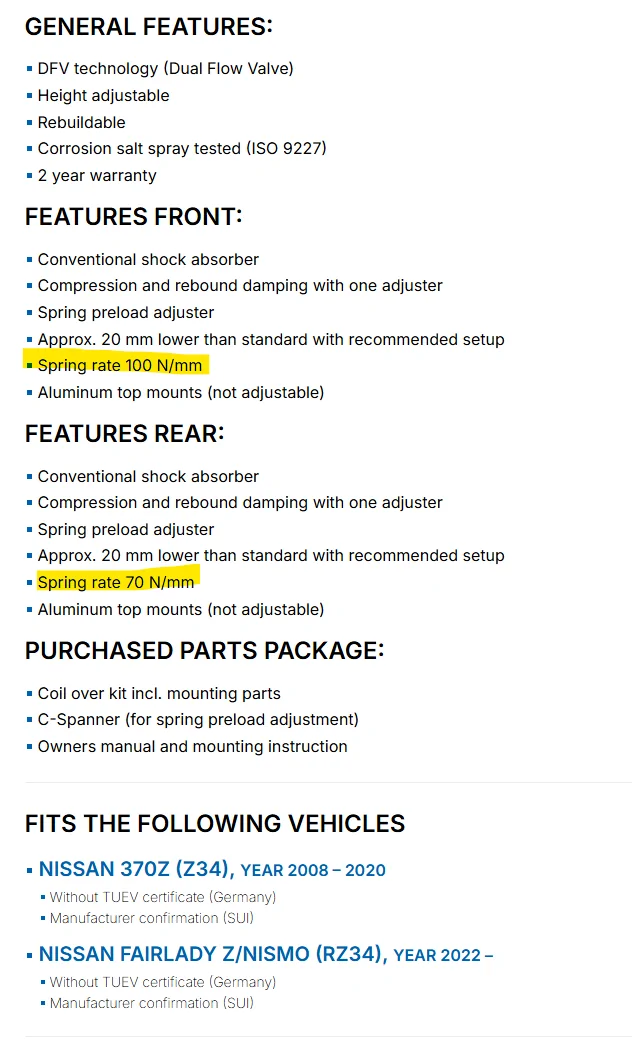
The higher rear rate on the hipermax R's and Nismo ohlins is because when you factor in the rear motion ratio (they're both divorced setups) you end up with less at-the-wheel spring rate in the rear vs the front.

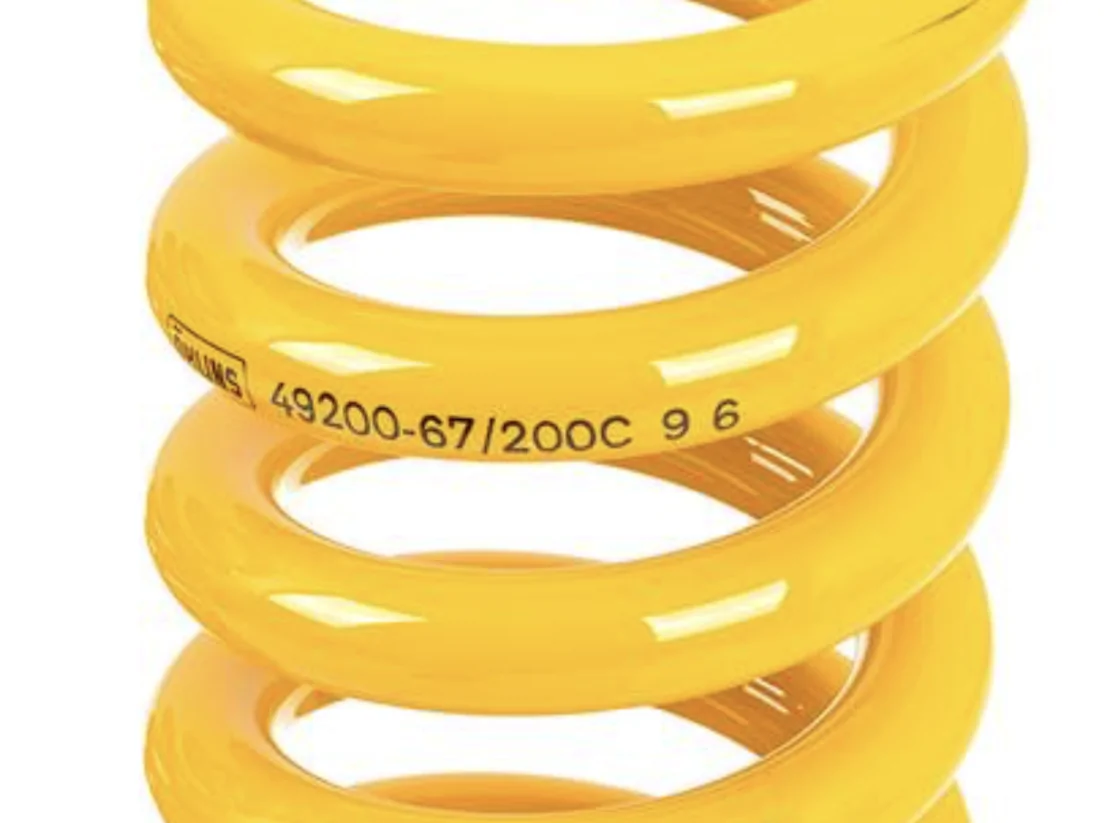
Where do you see the Euro Ohlin's having 200n/mm? the site says this when I visit:

1780601345987-cz.webp
 
Last edited:

SleepyD7

Active Member
First Name
David
Joined
Apr 17, 2026
Threads
1
Messages
26
Reaction score
24
Location
Florida
Car(s)
2024 Nissan Z Performance
At $2.7K that's KWV3 territory. Anyone compared the Ohlins to the venerated KW. KWV3 was the regarded by VQ owners as the best (non super premium) for the platform. Love to see how these compare.
 

FSUZ33

Well-Known Member
First Name
Chad
Joined
Feb 23, 2025
Threads
42
Messages
1,458
Reaction score
1,745
Location
Tallahassee, FL
Car(s)
‘24 Z NISMO
This is AI, so not difinitive. It is (supposedly) a concise conglomeration of internet articles/conversation. Although it may not be a kill shot, it's still hitting the paper.

Google response to "detailed comparison and pros and cons of ohlins road and track vs kw v3"

Both the Öhlins Road & Track and KW V3 are premium, highly engineered coilover systems, but they cater to very different driving philosophies. Öhlins leans heavily toward a responsive, track-focused feel that maintains excellent street compliance. KW V3 is a highly compliant, street-oriented setup that can also be adjusted for occasional weekend track use. [1, 2, 3, 4]

Öhlins Road & Track
The Öhlins R&T line is renowned for its patented DFV (Dual Flow Valve) technology, which allows the shock absorber to react incredibly quickly over sharp bumps and curbs, providing track-level handling without ruining daily driveability. [1, 2]

Pros:

  • DFV Technology: The Dual Flow Valve system blows off rapidly over harsh impacts, giving the car a refined, comfortable ride over rough roads while retaining razor-sharp response.
  • Lightweight Construction: Many R&T applications utilize aluminum bodies which reduce unsprung mass.
  • Inverted Strut Design: Front struts are typically inverted, significantly increasing structural rigidity under heavy cornering and braking loads. [1]
  • Single-Knob Adjustment: The damping knob simultaneously adjusts both rebound and compression, making it much easier to dial in settings without getting overwhelmed by too many variables.
Cons:
  • Stiffer Spring Rates: Despite the DFV technology, out-of-the-box spring rates are typically quite firm, which some find overly aggressive for long daily commutes on poorly paved roads. [1, 2]
  • Fewer Adjustments: Because it uses a single knob for combined rebound/compression, it doesn't allow for the micro-tuning of separate high-speed and low-speed movements. [1]
  • Rear Adjuster Access: Depending on the vehicle chassis, adjusting the rear damping can sometimes require removing interior panels or using a remote adjuster.
  • No Camber Plates: Most R&T kits do not include top mounts or camber plates, meaning you often have to purchase aftermarket ones (like Vorshlag or Ground Control) if you want to dial in aggressive track alignments. [1]
KW V3 (Variant 3)
The KW V3 is arguably the gold standard for high-performance street driving. They are designed to give you that aggressive, lowered stance and comfortable cruising, backed by the ability to fine-tune your suspension for the occasional track day. [1]

Pros:

  • Independent Adjustability: Features separate independent controls for rebound (usually 16 clicks) and low-speed compression (usually 12 clicks). This allows you to specifically tune out body roll and brake dive while separately adjusting how harsh the car feels over bumps.
  • Twin-Tube Dampers: Generally offers a softer, more forgiving ride on rough public roads compared to the Öhlins OTS (Out-The-Shelf) kits.
  • Corrosion Resistance: KW’s inox-line stainless steel strut bodies are highly resistant to rust, making them excellent for daily drivers in harsh, wintery, or salty coastal climates.
  • Softer Spring Rates: Easier on your back for daily driving and highway cruising. [1, 2, 3, 4]
Cons:
  • Less Track-Oriented: While highly capable, the softer spring rates and twin-tube design can feel slightly "squishy" or unresponsive on high-speed track sections compared to the Öhlins.
  • Complexity: Having four separate adjustments (rebound and compression for all four corners) can be a double-edged sword. If not set up correctly, the car can feel unbalanced or overly harsh.
  • Front Spring Perch Size: The specific "V-spring" design used by KW can occasionally restrict the width of the front wheel and tire you can run without adding wheel spacers.
  • Inability to Rebuild Locally: Öhlins dampers are typically fully rebuildable and revalvable by Öhlins-certified centers in the U.S., whereas KW shocks often have to be sent back to Germany for complex rebuilds. [1, 2, 3, 4, 5]
Which Should You Choose?
  • Go with Öhlins Road & Track if: You prioritize steering feel, track-day performance, and precision, but still need a car that can comfortably navigate the street. You want an easier tuning process and don't mind a slightly firmer ride. [1, 2]
  • Go with KW V3 if: Your car is a daily driver in rough road conditions, you primarily want a great street setup with a lowered stance, and you want independent control over rebound and compression. [1, 2, 3, 4]
 

SleepyD7

Active Member
First Name
David
Joined
Apr 17, 2026
Threads
1
Messages
26
Reaction score
24
Location
Florida
Car(s)
2024 Nissan Z Performance
AI is amazing (if all true). Think I'm gonna stick with KW cuz I value ride quality greatly here in my mid 40's. VQ boys back in the day always gushed about how KW gets you superior to stock ride quality and better than stock turn in and chassis balance. Awesome that we have a track day focused product from Ohlins now.
 

Murix

Well-Known Member
Joined
Jun 1, 2024
Threads
0
Messages
102
Reaction score
111
Location
SF Bay Area
Car(s)
Nismo Z, Abarth 124, Volvo C30
Having owned both, in terms of ride quality, I think the Ohlins is better everywhere. Even with stiffer springs, the Ohlins rides better on the street because of better damping. Spring rates are easy to change and tune for. The downside to Ohlins is cost.

Ohlins gets the job done using linear springs which give excellent feel and it maintains better than OEM ride.

I think on this chassis the KWV3 is using progressive springs, which is great for ride quality but you sacrifice feel and control. Not something most care about on the street I suppose.

The KW V3 are more durable in harsh conditions. Mine could take a beating. Maintenance and plush GT ride are like the primary reason to even consider V3.

With Ohlins you will eventually need a rebuild.

I think the KW V2 makes more sense from a cost perspective for a street setup. The extra adjustment of the V3 is kind of wasted unless you just like tinkering.

Granted, if you never had either, both would feel good subjectively, assuming you dial in the damping properly.
 
Last edited:

SleepyD7

Active Member
First Name
David
Joined
Apr 17, 2026
Threads
1
Messages
26
Reaction score
24
Location
Florida
Car(s)
2024 Nissan Z Performance
Super useful info. Is the KWV2 available for the RZ34?


Top