
Sponsored
Loading
Bumflik
Well-Known Member
Racebox told me put 5W30 or 40 in. Also my tuner R/T tuner suggesting 5W-40 aswell. Outside of the US and Canada and Europe. 5W 30 is standard on the same car. It purely for less resistance for easier crankshaft revolutions . All about efficiency not reliability or proper oil saturation over motor parts and turbos. Car makers win cuz you buy another car and EPA wins (Biden era) less gas used. Only reason why low viscosity oils are pushed. Look at all the GM Toyota And Ford motors failing since 2020 -2026
Bumflik
Well-Known Member
Also I unplugged my Oil solenoid too after Tune and build project. Love my VR30DDTT! She moves now! Plusi changed my Oil every 2000miles because I use Full E85 now that I have AMS flex fuel kit. Gotta make more frequent Oil change intervals once you go E
Last edited:
Schantin
Well-Known Member
- Joined
- Mar 27, 2026
- Threads
- 11
- Messages
- 47
- Reaction score
- 166
- Location
- Texas
- Website
- www.youtube.com
- Car(s)
- 2026 Nissan Z; 2002 Camaro Z28
- Occupation
- ER Nurse
I'm about the same (20-24PSI) at idle when fully warmed up with the delete kit. Above 2K RPM and 10% throttle my pressure is 50-56PSI. I'm currently running Motul 0W-20 "Asian Import" synthetic for the oil.Thanks. I am still using 0w20. That may explain why my idle oil pressure is around 18-23 at idle when my car is fully warmed up.
FL81-91-24-26z
New Member
Is this solenoid really any issue? Are their documented engine failures on Infinities because of it? Not saying I dont believe you, just trying to understand all the facts before I embark on this.
seems the design would have it fail in the safe position even if it did go bad.
seems the design would have it fail in the safe position even if it did go bad.
Bumflik
Well-Known Member
It gets stuck open. Once that happens oil pressure does not increase when rpms increase resulting in less oil for engine parts like bearings being damaged.Rod bearing damage occurs when the protective layer of oil between the connecting rod and the crankshaft breaks down, causing metal-on-metal friction that can destroy an engine. A potential fail point. Some engines experienced this. Accounts are documented. No warning signs or ECU codes will alert .
Bumflik
Well-Known Member
This is the hottest topic since 2019 for VR30DDTT. Otherwise a solid performance motor. Just do more frequent oil change intervals with your religious devotion to oil brand of choice and unplug or delete using block off plate for oil solenoid and ya good.
ZULU-1
Member
Perhaps it does beg the question….
Apparently, it makes sense to avoid a catastrophe when dealing with engine components that may be failing due to faulty design; however, so far, the evidence available through the forum (or lack thereof) could be seen as a double edge sword. Ideally, I prefer to do my own analysis using all the referenced material available… from established/proven sources. In regard to our subject topic, I’m yet to read/find reference material/that serves as factual evidence. That is, any evidence involving an acceptable level accurate information (ea. industry research) along with accumulated statistical data (empirical or scientific) on the issues (I’m also addressing forum entries concerning the Hood Poppers.) Aside from potentially voiding a warranty due to non-OEM sanctioned modifications, there is a degree of liability that you may be attaching to yourself when modifications are made to a vehicle registered in your name. When motor vehicles accidents (MVA) result in significant property damage and/or fatalities are involved…. every available record on historical actions taken to maintain/modify/operate a vehicle, (especially areas involving safety systems) may place the owner in a very precarious situation; perhaps, as a named defendant on a criminal or civilian case (whether driving/ present in the vehicle or not). Example: imagine an event where the driver of the Z hits a small deer and as a result the hood-poppers were activated. They functioned as designed (poppers are a component of the vehicle’s safety features). Now, replace the deer with a child of similar weight and size… most likely than not, the injuries to a child may turn-out to be serious…. may even become fatal. Then consider that a complainant’s lawyer(s), will have expert witnesses dissect any work done or intentionally omitted prior to the MVA, which did not comply with OEM requirements. In court, the onus will be transferred to you…. and you will be portrayed as a reckless individual whom harbor disregard for human life by willingly compromising safety. Again, a double edge sword… someone had argued that disabling the “hood popper system” may save the cost of repairing any activation damage, which was estimated at around $6K…. I argue (devil’s advocate) that in a significant event, the cost of litigation alone, may run up to a hundred times 6K… not to mention civil penalties and/or the outcome on a criminal case. I suggest getting all the “facts” available from defensible/referenced sources before deciding to tamper with system’s design…. including oil pressure valves…etc. Significant issues should be reported to the appropriate government agency and/or to The Insurance Institute for Highway Safety (IIHS). Go on the record as having tried recognition of discrepancies/flaws in design(s)… specially those related to safety. Well then…. allow me to get off the “Soap-Box”.
ENTRÉE of “scrambled eggs for thought” … 2 cents worth!
Kudos to FL81...
Be Well/Safe…
Apparently, it makes sense to avoid a catastrophe when dealing with engine components that may be failing due to faulty design; however, so far, the evidence available through the forum (or lack thereof) could be seen as a double edge sword. Ideally, I prefer to do my own analysis using all the referenced material available… from established/proven sources. In regard to our subject topic, I’m yet to read/find reference material/that serves as factual evidence. That is, any evidence involving an acceptable level accurate information (ea. industry research) along with accumulated statistical data (empirical or scientific) on the issues (I’m also addressing forum entries concerning the Hood Poppers.) Aside from potentially voiding a warranty due to non-OEM sanctioned modifications, there is a degree of liability that you may be attaching to yourself when modifications are made to a vehicle registered in your name. When motor vehicles accidents (MVA) result in significant property damage and/or fatalities are involved…. every available record on historical actions taken to maintain/modify/operate a vehicle, (especially areas involving safety systems) may place the owner in a very precarious situation; perhaps, as a named defendant on a criminal or civilian case (whether driving/ present in the vehicle or not). Example: imagine an event where the driver of the Z hits a small deer and as a result the hood-poppers were activated. They functioned as designed (poppers are a component of the vehicle’s safety features). Now, replace the deer with a child of similar weight and size… most likely than not, the injuries to a child may turn-out to be serious…. may even become fatal. Then consider that a complainant’s lawyer(s), will have expert witnesses dissect any work done or intentionally omitted prior to the MVA, which did not comply with OEM requirements. In court, the onus will be transferred to you…. and you will be portrayed as a reckless individual whom harbor disregard for human life by willingly compromising safety. Again, a double edge sword… someone had argued that disabling the “hood popper system” may save the cost of repairing any activation damage, which was estimated at around $6K…. I argue (devil’s advocate) that in a significant event, the cost of litigation alone, may run up to a hundred times 6K… not to mention civil penalties and/or the outcome on a criminal case. I suggest getting all the “facts” available from defensible/referenced sources before deciding to tamper with system’s design…. including oil pressure valves…etc. Significant issues should be reported to the appropriate government agency and/or to The Insurance Institute for Highway Safety (IIHS). Go on the record as having tried recognition of discrepancies/flaws in design(s)… specially those related to safety. Well then…. allow me to get off the “Soap-Box”.
ENTRÉE of “scrambled eggs for thought” … 2 cents worth!
Kudos to FL81...
Be Well/Safe…
Is this solenoid really any issue? Are their documented engine failures on Infinities because of it? Not saying I dont believe you, just trying to understand all the facts before I embark on this.
seems the design would have it fail in the safe position even if it did go bad.
jliuod
Active Member
- Thread starter
- #12
Spoke too soon. Got a check engine light today. It was the oil solenoid code. I used the JR supplied dummy plug to put into the stock harness. Apparently it did not work. I ended up putting the oem solenoid into the stock harness and just zip tied it on to a nearby bracket.
Will call JR tomorrow to see what could be done.
Will call JR tomorrow to see what could be done.
Last edited:
Schantin
Well-Known Member
- Joined
- Mar 27, 2026
- Threads
- 11
- Messages
- 47
- Reaction score
- 166
- Location
- Texas
- Website
- www.youtube.com
- Car(s)
- 2026 Nissan Z; 2002 Camaro Z28
- Occupation
- ER Nurse
You have some interesting points from a theoretical perspective.Perhaps it does beg the question….
Apparently, it makes sense to avoid a catastrophe when dealing with engine components that may be failing due to faulty design; however, so far, the evidence available through the forum (or lack thereof) could be seen as a double edge sword. Ideally, I prefer to do my own analysis using all the referenced material available… from established/proven sources. In regard to our subject topic, I’m yet to read/find reference material/that serves as factual evidence. That is, any evidence involving an acceptable level accurate information (ea. industry research) along with accumulated statistical data (empirical or scientific) on the issues (I’m also addressing forum entries concerning the Hood Poppers.) Aside from potentially voiding a warranty due to non-OEM sanctioned modifications, there is a degree of liability that you may be attaching to yourself when modifications are made to a vehicle registered in your name. When motor vehicles accidents (MVA) result in significant property damage and/or fatalities are involved…. every available record on historical actions taken to maintain/modify/operate a vehicle, (especially areas involving safety systems) may place the owner in a very precarious situation; perhaps, as a named defendant on a criminal or civilian case (whether driving/ present in the vehicle or not). Example: imagine an event where the driver of the Z hits a small deer and as a result the hood-poppers were activated. They functioned as designed (poppers are a component of the vehicle’s safety features). Now, replace the deer with a child of similar weight and size… most likely than not, the injuries to a child may turn-out to be serious…. may even become fatal. Then consider that a complainant’s lawyer(s), will have expert witnesses dissect any work done or intentionally omitted prior to the MVA, which did not comply with OEM requirements. In court, the onus will be transferred to you…. and you will be portrayed as a reckless individual whom harbor disregard for human life by willingly compromising safety. Again, a double edge sword… someone had argued that disabling the “hood popper system” may save the cost of repairing any activation damage, which was estimated at around $6K…. I argue (devil’s advocate) that in a significant event, the cost of litigation alone, may run up to a hundred times 6K… not to mention civil penalties and/or the outcome on a criminal case. I suggest getting all the “facts” available from defensible/referenced sources before deciding to tamper with system’s design…. including oil pressure valves…etc. Significant issues should be reported to the appropriate government agency and/or to The Insurance Institute for Highway Safety (IIHS). Go on the record as having tried recognition of discrepancies/flaws in design(s)… specially those related to safety. Well then…. allow me to get off the “Soap-Box”.
ENTRÉE of “scrambled eggs for thought” … 2 cents worth!
Kudos to FL81...
Be Well/Safe…
By your reasoning, any deviation from OEM maintenance / recommendations would place the vehicle owner / user at legal risk. Per this logic, anything other than dealer performed maintenance with only dealer approved materials would be considered reckless and legally liable. This would include missing an oil change by a couple miles [or performing an oil change early], using an aftermarket oil filter, using anything other than the tires that came with the car from the factory, etc. Maybe the tire PSI was 32 when the car states optimal should be 33. Technically, even windshield wipers that are not Nissan factory pieces would be implements of contempt if a car had an accident in wet conditions. To say otherwise would require peer reviewed research that is concurred upon by the manufacturer (Nissan in this case).
Again, not saying your point doesn't have merit. But, at that point, a lawyer delving that deep will find "something" to push their case. Maybe the driver had a couple scratches on his sunglasses (vision impairment), or the radio was on (obviously distracting from the complete task of driving), or cargo was in the hatchback (which could be argued as a flying detriment to safety and thus a contributing accident factor) There's no end to it.
trackratZ
Well-Known Member
Oil starvation is serious, but where is the documented studies about this particular engine and number of failures due to the solenoid malfunction? We can't only rely on forum chats and even individual experiences, since no telling what those individuals modified elsewhere that can be related to the failures. I'm still under warranty, so won't consider this for now, unless we see that proof, and Nissan knowing about it (and refusing any TSB to fix?). This is part of the current VR30DDTT design and even if has this defect we need to see verified analysis done.It gets stuck open. Once that happens oil pressure does not increase when rpms increase resulting in less oil for engine parts like bearings being damaged.Rod bearing damage occurs when the protective layer of oil between the connecting rod and the crankshaft breaks down, causing metal-on-metal friction that can destroy an engine. A potential fail point. Some engines experienced this. Accounts are documented. No warning signs or ECU codes will alert .
And same with hood poppers mentioned above, could be a huge liability issue. I'd rather deal with the damage, yeah not cheap, rather than have some lawyer seeing the safety-related poppers removed or bypassed.
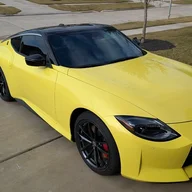
KrackaC8
Well-Known Member
- First Name
- Christopher
- Joined
- Nov 23, 2025
- Threads
- 8
- Messages
- 1,162
- Reaction score
- 1,714
- Location
- Sioux City, IA
- Car(s)
- 2023 Z Performance, 2024 Grand Cherokee, 2023 Wrangler Rubicon
- Occupation
- Commodities
I had the conversation with RaceBox when getting tuned as I was fully prepared to delete the oil solenoid. Their advice was to change the oil regularly (5k miles or sooner) and I'll be just fine. They stated they only see this issue on higher mileage less cared for engines that ran factory intervals of 10k miles. It seems to be a cleanliness/sludge issue. I do wish the solenoid was designed in a way to fail in the other direction, but I'm not going to worry about it since my engine is fresh with low miles and clean oil.Oil starvation is serious, but where is the documented studies about this particular engine and number of failures due to the solenoid malfunction? We can't only rely on forum chats and even individual experiences, since no telling what those individuals modified elsewhere that can be related to the failures. I'm still under warranty, so won't consider this for now, unless we see that proof, and Nissan knowing about it (and refusing any TSB to fix?). This is part of the current VR30DDTT design and even if has this defect we need to see verified analysis done.
And same with hood poppers mentioned above, could be a huge liability issue. I'd rather deal with the damage, yeah not cheap, rather than have some lawyer seeing the safety-related poppers removed or bypassed.